Date: 27 March 2025
Time: 13:30 -18:30
Location: Bushuis/Oost-Indisch Huis, Kloveniersburgwal 48, Amsterdam
Room: Kartini room
An event about the deep material and social histories of early modern textiles and their long lasting impact on textile industries and practices in a global context. The conversation will be led by an interdisciplinary group of textile scholars, including students, conservators, curators, and art historians.
The Dutch East and West India Companies (VOC and WIC) were instrumental players in the early modern global textile trade. This trade brought great wealth to the Companies, which underwrote lasting systems of oppression and violence, most notably – though not exclusively – the transatlantic slave trade. While the negative impact of the trade is irrefutable, the global movement of silks, cottons, linens, woollens, and dyestuffs also facilitated the spread of new knowledge systems, encouraged inventive material expression, and challenged existing power structures. How are we to understand the innovations fostered by the early modern textile trade in light of the systemic oppression with which it was interwoven?
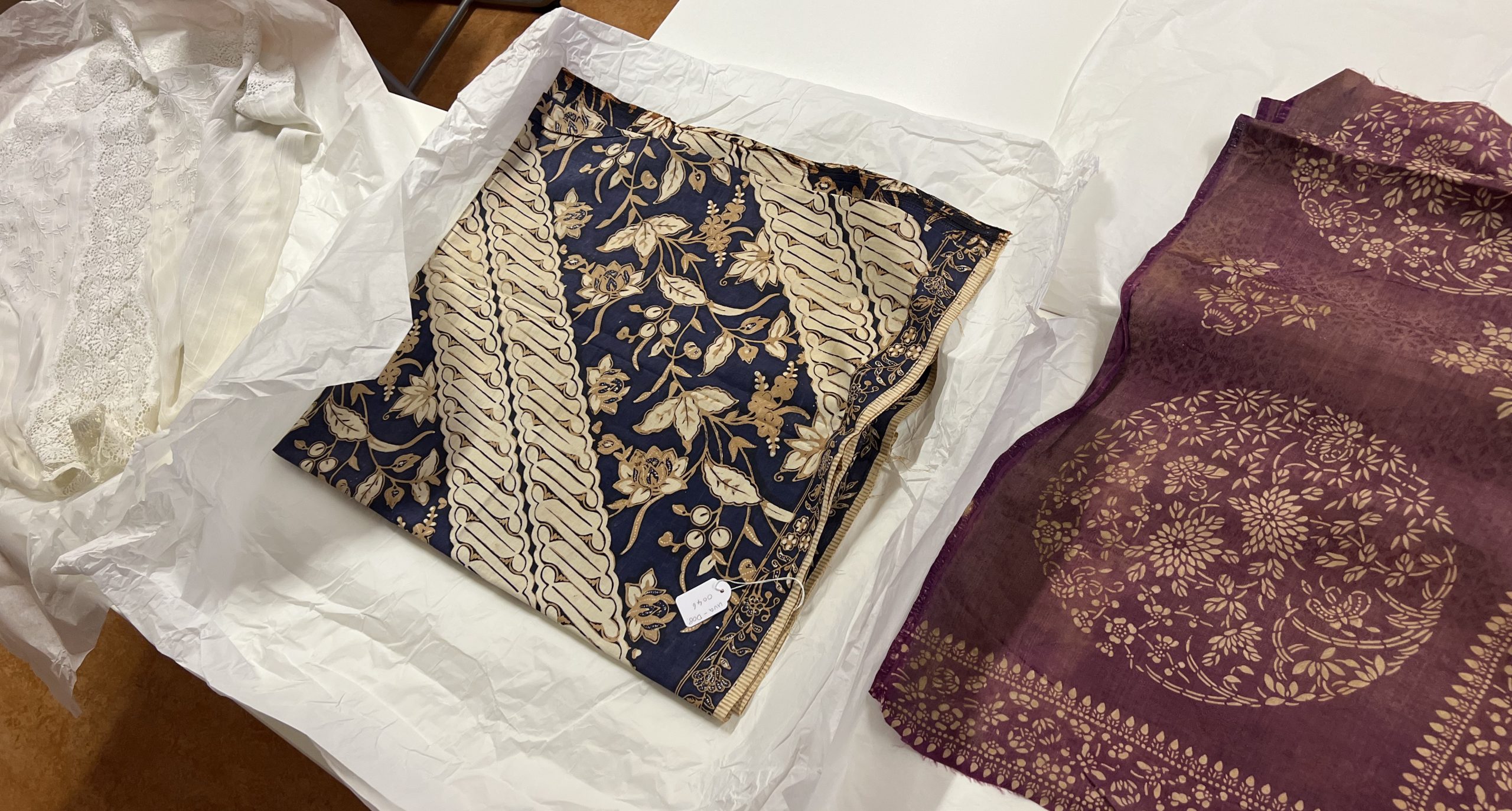
The event, co-organized by Carrie Anderson, Jenny Boulboullé, and Hanneke Grootenboer, features various presentations, including by me with the titel ‘Retelling textile stories’, as well as poster presentations by master students of the UvA MA course Global Textures: Fibre Arts and Fabrics of Resistance on textiles from the UvA Textile Study Collection. It also marks the launch of a newly funded research project Black Magic on the Leiden staalmeesters’ textile sample books.
This event is hosted by the Amsterdam Centrum for Studies of Early Modern Culture (ACSEM) at UvA and will be held at the Kartini room at Bushuis aan de Kloveniersburgwal 48 in Amsterdam with drinks afterwards.
For more info & full program go to Unravelling Colonial Textiles